Author: saeed

How To Pair Your Outside Coffee Defer With Exterior Sofas?How To Pair Your Outside Coffee Defer With Exterior Sofas?

Creating a comfortable outside seats area is more than just placing a sofa and a put of together. When you pick the right outdoor coffee put over to go with your sofas, you can turn a simpleton patio into a hospitable point to unwind and hang out with friends home furniture manufacturer.

Many populate only focus on how each piece looks on its own. However, the key is duplicate them well so the whole quad feels balanced and workings smoothly. Things like size, tallness, stuff, and how you arrange them all matter to. When these parts come together nicely, your outside area feels inviting and easy to use.

A Guide to Pair Your Outdoor Coffee Table with Your Outdoor Sofas(H2)

Here we will walk you through how to pair your outdoor coffee table with your sofas. So, it looks of import and works well every day. Make sure to keep the following things in mind to make the right pick.

Start with Size and Scale

One of the most world-shattering things is qualification sure the java table fits the size of your sofas. If the defer is too big, it can take over the space and feel jammed. If it is too modest, it might look out of place and not be very useful.

A good rule is to take a java hold over that is about two-thirds the duration of the sofa it faces. For example, if your sofa is 90 inches long, a coffee set back around 55 to 65 inches long usually workings well. This keeps everything looking equal without tactual sensation too fast.

You should also think about the width of the prorogue. It should be big enough to hold drinks or decorations but still lead plentitude of room to move around comfortably.

Match the Height for Comfort

Height is evidentiary for how easy the postpone is to use. The java set back should be the same tallness as the sofa seat or just a little lower. Most outside sofas have seating area about 16 to 18 inches high. A set back in this range makes it easy to strain things on top.

If the table is too tall, it feels awkward. People will have to bend down too far to grab something if it is too low. Comfort should always be your steer.

Match Materials and Finishes

Outdoor furniture needs to handle the brave out. So, materials are not just about looks. They also affect how long your article of furniture lasts. If your sofas have atomic number 13 frames, look for a java postpone with metal or glaze that matches. If your sofas have woody parts, a wooden shelve helps everything look matched.

Here are some commons combos that work well:

  • Aluminum sofas with metal or glaze over-top tables
  • Wooden sofas with teak or solidness wood tables
  • Rattan sofas with woven or glass tables

Using similar materials gives your outside quad a nice, pulled-together look. Working with a good exterior article of furniture provider can help you find twinned pieces that look outstanding and stand up up to the endure.

Think About Your Outdoor Space Layout

How you arrange your piece of furniture makes a big remainder in how well your outside coffee set back workings with your sofas.

  • For Smaller Balcony: If you have a modest balcony, a pack circle hold over might be better than a big perpendicular one. Round tables fit tight spaces nicely and make it easier to move around.
  • For Bigger Patios: Rectangular or square up tables usually play off well with territorial sofas for large patios. They fill up the quad nicely and offer plenteousness of room on top.

Always measure the quad between the postpone and the sofas. Ideally, result about 16 to 18 inches so populate can strive the hold over well without feeling incommodious.

Put Functionality First

While style is remarkable, how you plan to use your outdoor coffee shelve matters most. Think about what you need it for. It can be used for different purposes such as below

  • Will it hold snacks and drinks when you have guests?
  • Will you use it to display plants or decorations?
  • Could it double as a footrest?

If you entertain a lot, pick a hardline table with enough space on top. If you want supernumerary entrepot, look for tables with shelves or hidden compartments.

Ensure the prorogue is realistic and easy to use daily.

Match the Table Shape to Your Sofa

The shape of your coffee set back should go well with the form of your sofa.

For example, straight-edged sofas look important with perpendicular or square tables. Curvy or modular sofas usually pair better with encircle or oval tables. Mixing shapes thoughtfully adds interest but still keeps things equal.

Try to keep off mating very acutely-edged tables with very soft, rounded sofas unless your overall title is meant to be bold and contrasting.

Plan for Weather Resistance

Outdoor article of furniture has to deal with sun, rain, dust, and dynamic brave out. So, choosing durable materials is very monumental.

Look for exterior java tables made from secure materials like pulverise-coated aluminium, curable wood, or synthetic substance wicker. The tabletop should be easy to clean and should not fade quickly.

Your outdoor sofas should also have cushions that resist water and frames that do not rust.

Talking with an exterior java set back producer can help you make sure the materials you pick are right for your local weather and will last a long time.

Keep Traffic Flow in Mind

Your outdoor seating room area should feel open and easy to move around.

After placing your coffee set back in front of the sofa, check how much quad is left for walking. There should be enough room for populate to move comfortably.

If your terrace is narrow down, littler nesting tables that can be emotional around are a ache pick. Good spatial arrangement helps the area feel lax, not packed.

Mix and Match Sets Carefully

Some people like to buy twinned article of furniture sets, while others prefer mixture pieces from different collections. If you mix styles, pay care to

  • Frame colors
  • Cushion fabric colors
  • Table rise textures

Even if the pieces come from different places, keeping synonymous colours and finishes helps everything look like it belongs together. For retailers and designers, workings with a dependable exterior coffee set back manufacturer makes it easier to pit usage finishes to sofa designs.

Lighting and Accessories Matter Too

Pairing your exterior coffee shelve and sofas is not just about the furniture itself, accessories complete the look. Try adding,

  • Outdoor lanterns
  • Decorative trays
  • Potted plants
  • Weather-resistant candles

However, do not overcrowd the put over. Leave enough quad for virtual use. Good light around your seating room area also highlights the piece of furniture and makes the quad feel warm and tantalising in the evening.

Simple Styling Tips for a Balanced Look

Try these ideas to make your outside java defer and sofas look like they belong together. These little touches can really ameliorate how your quad looks.

  • Match colors from the sofa in the put of d cor: Use cushions, trays, or small decorations that share colors with your sofa. This ties everything together visually.
  • Keep the shelve surface tidy: Do not overcrowd the postpone. A few cosmetic items plus space for drinks work best.
  • Use an outdoor rug to bring up it all together: Placing both the sofa and java prorogue on a rug creates a cozy, wired seating area.

FAQs

How far should the java remit be from the sofa?

Leave about 16 to 18 inches between the java remit and the sofa. This makes it easy to strain the postpone and move around comfortably.

Does the coffee hold over need to play off the sofa exactly?

It is fine if they do not pit dead. However, using similar materials or colours helps produce a equal look.

What form of coffee prorogue workings best for moderate patios?

Round or oval tables are of import for modest spaces because they make it easier to move around.

Conclusion

Choosing the right exterior java put of to go with your sofas is all about balance, console, and practicality. When the size, height, materials, and layout work well together, your outside space feels welcoming and easy to use.

Start by measurement your quad carefully. Make sure the postpone height matches the seat height of sofa. Pick materials and finishes that look good together. Leave enough room for people to move around well and keep the setup simpleton but useful.
Custom Aerial Work Platform | HYNEE R&D Custom Solutions For Diverse Industry ScenariosCustom Aerial Work Platform | HYNEE R&D Custom Solutions For Diverse Industry Scenarios

In the global mobile elevating work platform (MEWP/AWP) market, the era of "one-size-fits-all" man lifts is long gone. For equipment rental companies, facility managers, and specialized contractors, standard assembly-line products often fall short when facing complex, real-world job sites. Whether it is a narrow warehouse aisle requiring millimeter-level precision, an indoor cleanroom demanding zero emissions, or an on-platform power source indispensable for high-altitude operations—compromising with standard specifications usually leads to reduced efficiency or increased safety hazards.

At HYNEE, we refuse to compromise on quality. We understand that every client’s needs for a reliable vertical boom lift or material lift are unique. Backed by a decade of deep technical expertise and a mature R&D framework, we offer highly flexible product customization and options. From core functional modifications to fine aesthetic details, we comprehensively adapt our machines to various complex working environments and specialized scenarios.

The Pillars of HYNEE's Customization: Why Our Vertical Boom Lifts Deliver

Customizing a specialized man lift or vertical boom lift is a precise engineering balancing act—it requires modifications without compromising structural integrity, safety certifications, or operational reliability. HYNEE achieves this seamlessly through three core competitive advantages:

1. A 20-Engineer Professional Team: Closed-Loop Execution

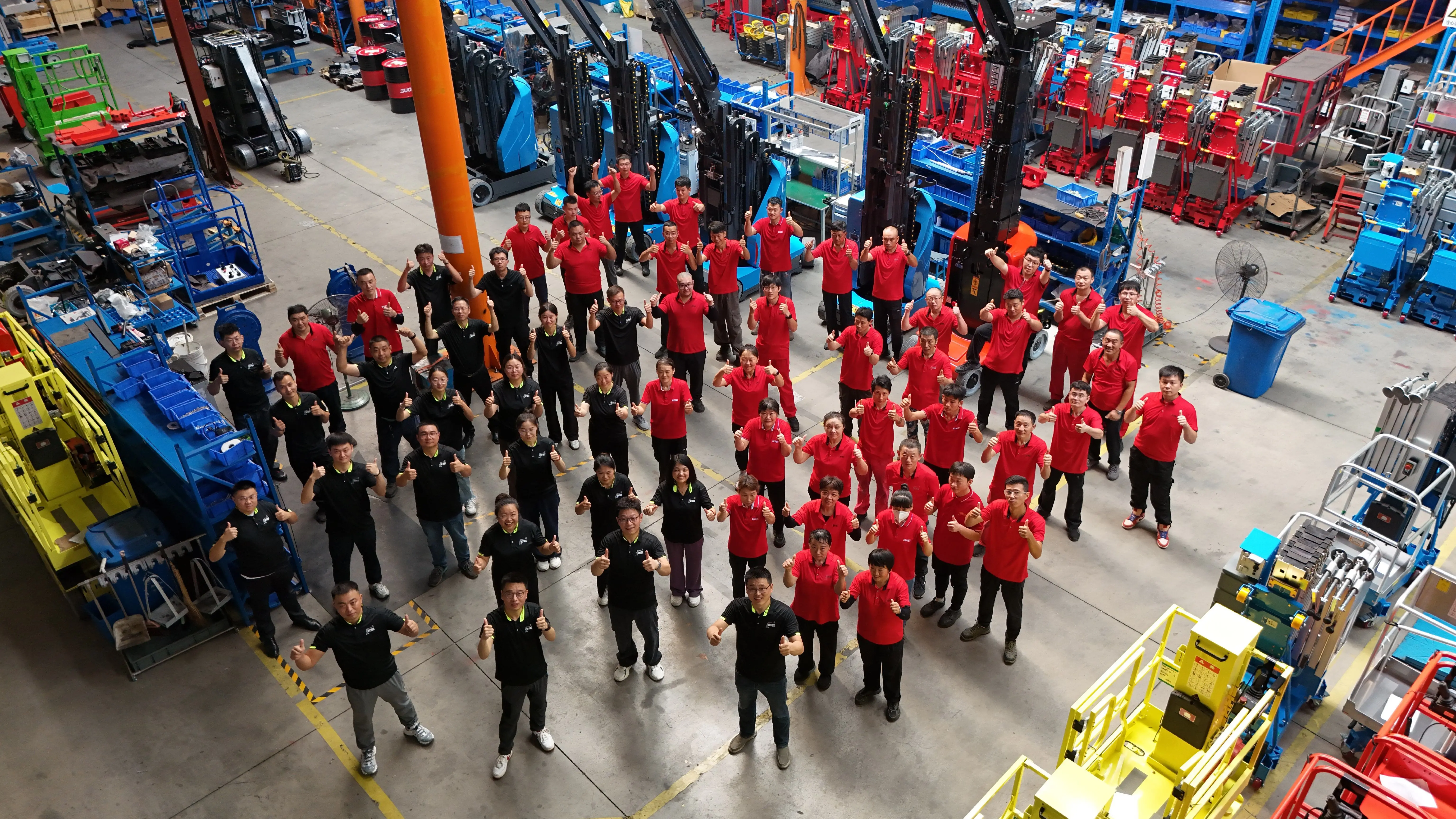
Our engineering backbone consists of a dedicated 20-expert technical team, representing one-fifth of our total workforce. This is an integrated, "full-lifecycle" technical unit covering R&D, structural engineering, and after-sales diagnostics. By keeping the entire chain in-house, we ensure highly unified technical communication and agile R&D responsiveness for any vertical boom lift customization from initial request to final deployment.

HYNEE Team photo

2. A Decade of Expertise: A Proven "Scenario Solution Library"

Customization cannot happen in a vacuum. Over the past ten years, the HYNEE team has gone deep into real-world applications of mast boom lifts and other aerial platforms across warehousing, logistics, manufacturing plants, and heavy industrial parks. By systematically analyzing hundreds of specific field cases, we have built a comprehensive "Working Scenario Library".

3. End-to-End Rigorous Delivery Protocol

The true value of an excellent customized man lift is proven by its long-term field performance. HYNEE utilizes a rigorous delivery protocol that seamlessly connects initial blueprints with final on-site handovers. We offer full-lifecycle technical support and service guarantees for every customized unit, ensuring a stable, long-term return on your investment.

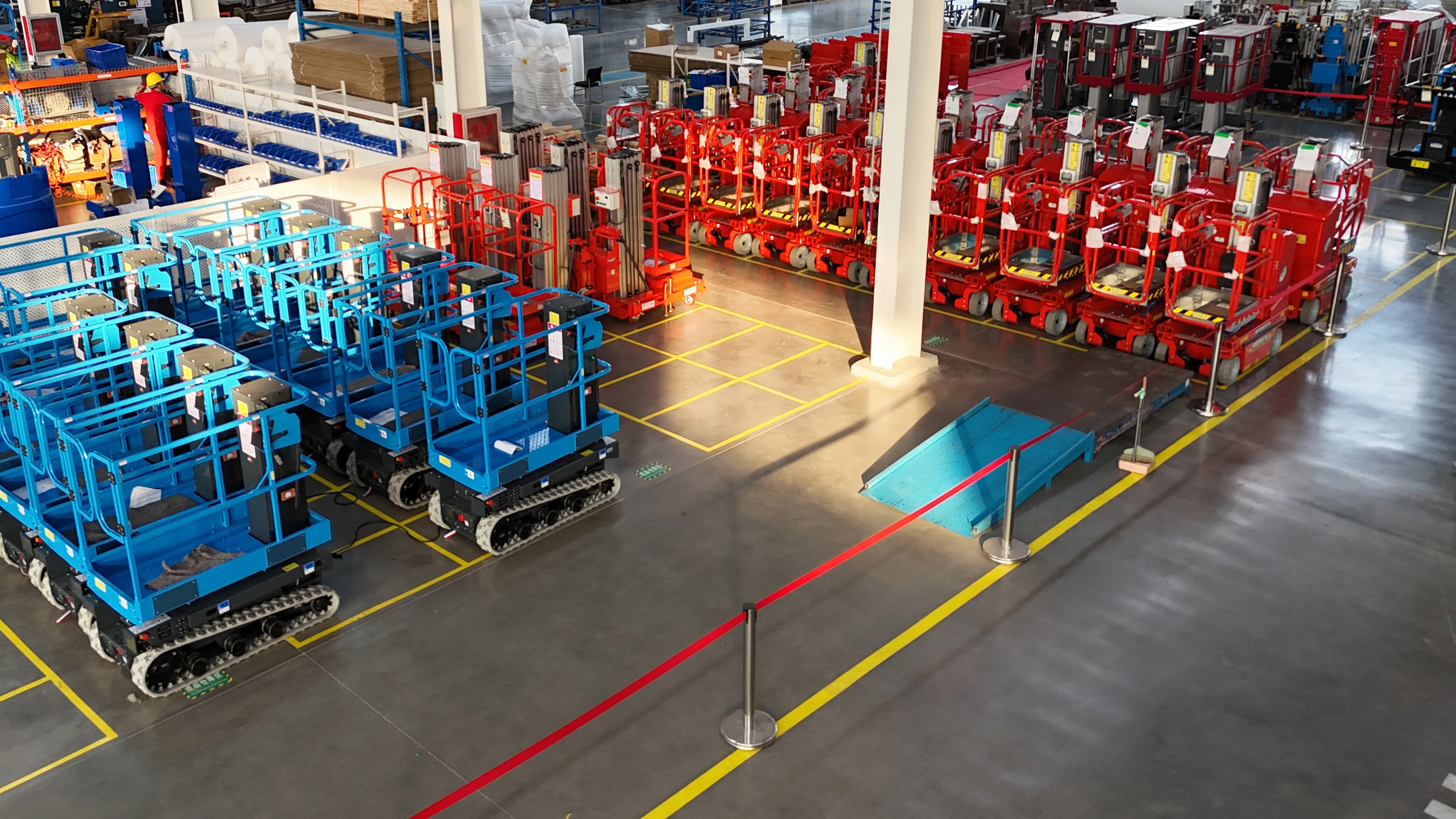
Finished Goods Area - Live Photo

Insight into Complex Job Sites: Four Core Advanced Customization Systems

To help buyers and rental companies maximize fleet utilization, HYNEE has developed a mature, market-proven suite of advanced optional components for our mast boom lift and vertical boom lift series. These systems integrate flawlessly into our flagship models to directly solve core pain points:

Radar Anti-Collision System:

Utilizing advanced millimeter-wave radar technology, this system effectively scans the operator’s blind spots. For equipment rental companies managing a man lift fleet, this drastically minimizes property damage caused by collisions in tight spaces, significantly lowering bodywork and panel repair costs.

Anti-Crush Device:

Configured with high-sensitivity touch sensors. If an operator on a mast boom lift is inadvertently pressed against overhead steel structures or ventilation ducts, the system instantly cuts off all lifting and drive functions.

High-Performance Custom Lithium Battery Pack:

Featuring advanced Lithium Iron Phosphate ($text{LiFePO}_4$) cells paired with an intelligent BMS. Delivering zero emissions, ultra-low noise levels, and a cycle life that far outlasts traditional lead-acid batteries, it helps fleet owners significantly reduce operational overheads of their electric vertical boom lifts.

Intelligent Assist Drive & Custom Fleet Livery:

Concurrently, we open original factory color/livery customization to major global rental players, turning your man lift into a moving billboard for your professional brand as soon as it arrives on site.

Empowering Flagship Products: Turning Customization into Core Selling Points

Every custom option we engineer is deeply rooted in our technologically mature, market-leading flagship vertical boom lift and mast boom lift lines.

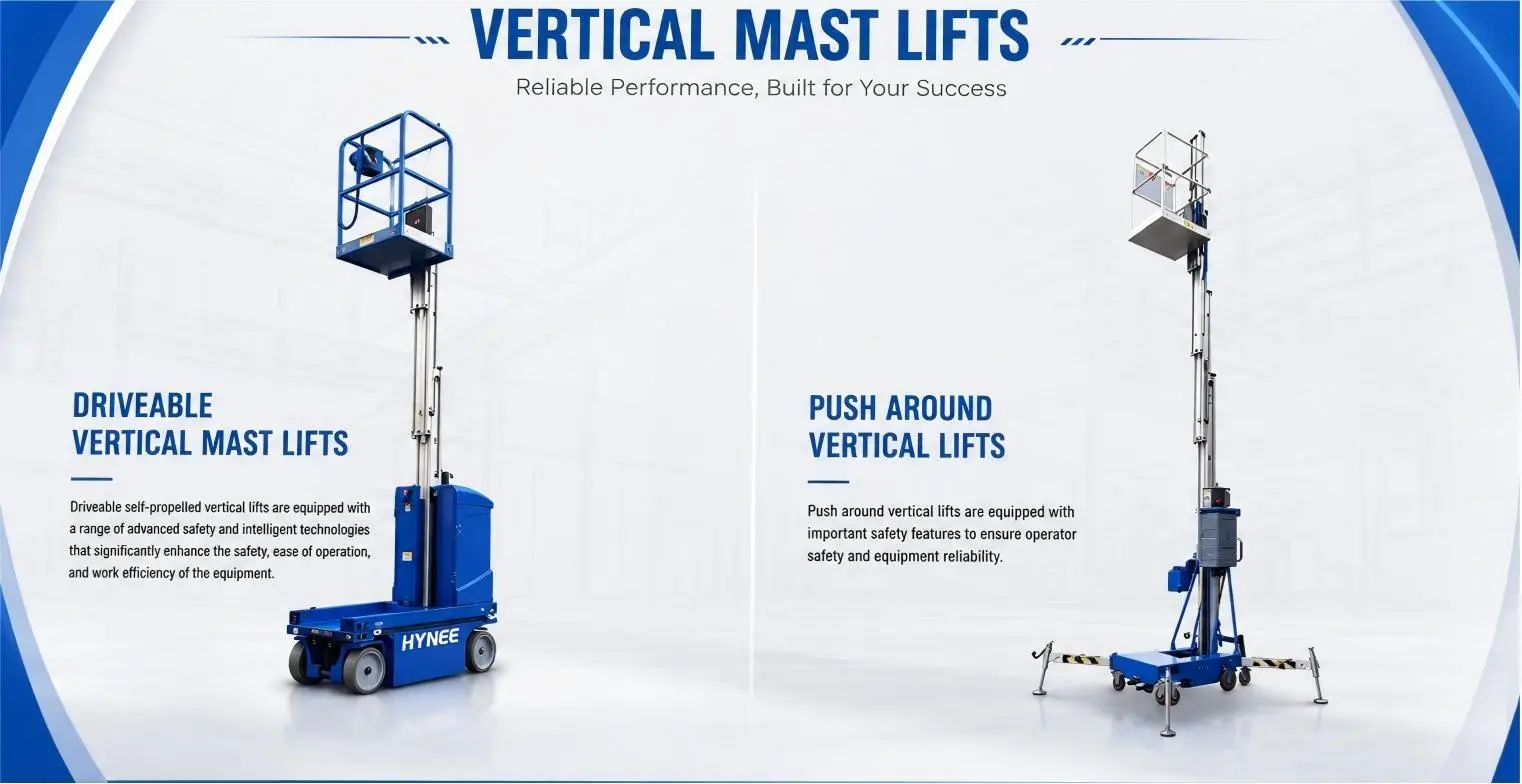
When dealing with tight commercial areas or lightweight industrial flooring, our self-propelled vertical boom lifts stand out for their extreme compactness. By equipping them with our Custom Lithium Battery Packs and Radar Anti-Collision Systems, these lifts transform into the ultimate tools for modern warehousing. They navigate narrow rack aisles with agility, securing high rental utilization in urban logistics hubs.

vertical mast lift collection

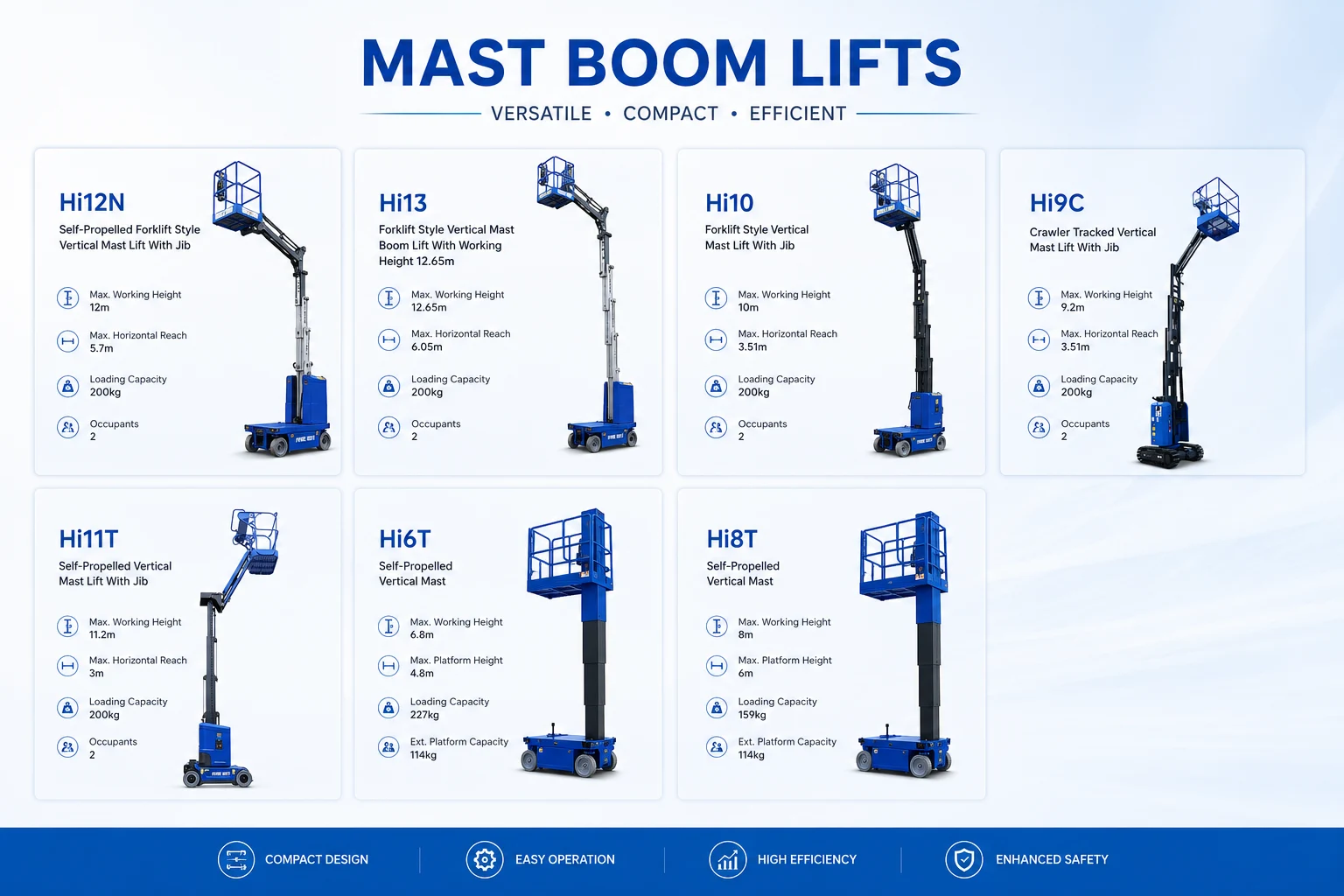
Mast Boom Lifts (HI Series)

Models like the HYNEE HI12N Mast Boom Lift are industry-renowned for their $360^{circ}$ continuous rotation and active pothole protection systems. When integrated with our Anti-Crush Devices and Platform-to-Ground AC Power/Air Lines, the HI mast boom lift series morphs into a dedicated specialist for complex industrial assembly and precision chemical plant maintenance. Operators can focus entirely on the technical task at hand without being distracted by equipment safety management.

mast boom lifts collection

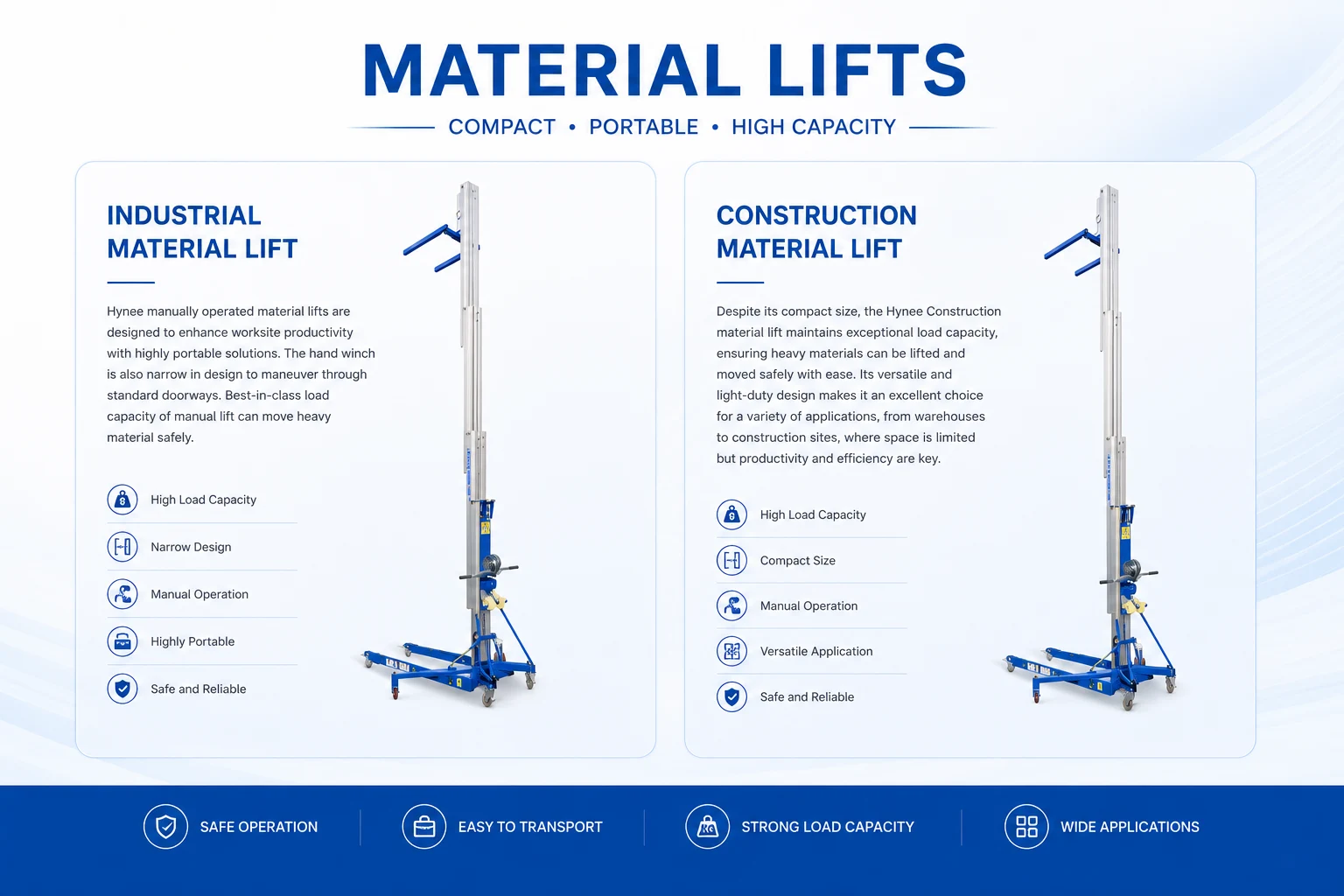
Industrial & Construction Material Lifts

Heavy material handling demands rigorous equipment load capacities. To address this, HYNEE’s material lifts feature the optional Assist Drive System, making single-person transport of heavy loads effortless. Combined with specialized forks and Custom Fleet Livery tailored to large rental operations' VI, our material lifts complement your man lift fleet perfectly, handling everything from bulky HVAC units to precision industrial machinery.

material lift collection

Conclusion: Partner with HYNEE to Seize Every Commercial Opportunity

Customization is far more than changing a chassis color; it is a rigorous engineering discipline that must find the perfect equilibrium between safety compliance, structural reliability, and cost-effectiveness.

With a dedicated 20-engineer R&D structure, a decade of scenario data accumulation, and an unyielding commitment to rigorous end-to-end execution, HYNEE is helping global equipment buyers and rental companies pioneer new blue-ocean markets for mast boom lifts, man mast boom lifts manufacturer , and vertical boom lifts.

Are you currently facing a challenging job site constraint? Contact the HYNEE engineering team today, and let our customized solutions elevate your fleet’s potential!

Complete Guide to Bowling Equipment Manufacturing and TechnologyComplete Guide to Bowling Equipment Manufacturing and Technology

equipment manufacturing has evolved significantly as technology, materials, and customer expectations have changed. Modern bowling centers rely on a combination of mechanical equipment, digital systems, durable lane surfaces, and customer-focused technology to provide an efficient and enjoyable experience.

Understanding the basics of bowling equipment manufacturing can help bowling center owners, investors, and facility managers make better purchasing decisions. From bowling lanes to automated scoring systems, every part of the facility plays an important role.

What Is Bowling Equipment Manufacturing?

Bowling equipment manufacturing involves the design, production, testing, and distribution of equipment used in bowling facilities.

This can include bowling lanes, pinsetters, bowling pins, ball returns, scoring systems, approaches, gutters, bumpers, seating, and replacement components.

Manufacturers may produce individual products or complete equipment packages for new and existing bowling centers.

Manufacturing High-Quality Bowling Lanes

Bowling lanes are among the most important products manufactured for a bowling center. Manufacturers focus on dimensions, surface characteristics, durability, and consistency.

Commercial bowling lanes need to withstand frequent player activity and repeated bowling ball impact. Modern materials can help improve durability and simplify maintenance.

Manufacturers may offer different lane solutions depending on whether a facility is designed for professional competitions, recreational bowling, or family entertainment.

The Role of Pinsetters

Pinsetters are sophisticated mechanical systems that automate the process of resetting bowling pins.

After a player completes a roll, the system needs to clear the lane and prepare the pins for the next frame. This process must be performed repeatedly and efficiently.

Manufacturing reliable pinsetters requires careful engineering and durable mechanical components. Maintenance accessibility is also important because these systems experience continuous operation.

Development of Automatic Scoring

Digital scoring has transformed the traditional bowling experience. Instead of requiring players to calculate scores manually, automated systems handle the calculations and display results electronically.

Modern scoring technology can include interactive screens, player information, game statistics, and lane management features.

Manufacturers and technology providers need to ensure that scoring systems integrate properly with other bowling equipment.

Bowling Ball Return Technology

Ball return systems are designed to return bowling balls to players after each throw. Their performance can influence the speed and convenience of a bowling game.

Manufacturers consider factors such as mechanical reliability, noise, safety, space requirements, and facility layout when developing ball return systems.

A suitable ball return configuration can improve game flow and provide a more comfortable environment.

Materials Used in Bowling Equipment

Material selection is a major part of equipment manufacturing. Bowling equipment must balance durability, performance, appearance, and maintenance requirements.

Synthetic materials are commonly considered for commercial lane surfaces because they can provide consistent characteristics and withstand frequent use.

Other components may require specialized plastics, metals, electronics, or composite materials depending on their function.

Manufacturing Quality Control

Quality control is essential throughout the manufacturing process. Equipment should be inspected to ensure that it meets appropriate specifications before being supplied to customers.

Quality control can include dimensional checks, mechanical testing, electrical testing, surface inspections, and operational testing.

Reliable quality control helps manufacturers maintain consistency across products and reduce potential equipment problems.

Integration of Smart Technology

Technology is increasingly becoming part of bowling center operations. Modern facilities may use digital displays, computerized scoring, management software, customer interfaces, and entertainment systems.

Integration allows different systems to communicate and operate together. This can make facility management more efficient while providing customers with a modern experience.

Manufacturers that understand technology integration can help bowling centers prepare for changing customer expectations.

Safety in Equipment Manufacturing

Safety is another important consideration. synthetic bowling lane manufacturer equipment includes mechanical and electrical components, so manufacturers must consider safe operation during product development.

Equipment should be designed to minimize avoidable hazards and provide appropriate protection around moving components.

Clear operating instructions and maintenance procedures can further support safe facility operations.

Customization and Facility Design

Manufacturing does not always involve standard products. Many bowling centers require customized equipment based on building dimensions and business objectives.

Manufacturers may work with architects, designers, and facility owners to develop appropriate lane configurations and equipment packages.

Customization can help operators create facilities that are visually attractive while maintaining practical functionality.

Manufacturing High-Quality Bowling Lanes

0

The future of bowling equipment manufacturing is likely to involve greater automation, digital integration, energy efficiency, and customer personalization.

As entertainment expectations continue to change, bowling centers may increasingly combine traditional bowling with interactive technology and other recreational features.

Manufacturers that invest in research and development can help the industry adapt to these changing requirements.

Manufacturing High-Quality Bowling Lanes

1

When selecting a manufacturer, facility owners should consider product quality, technical experience, customization, installation support, warranty coverage, replacement parts, and after-sales service.

A manufacturer should ideally understand the complete requirements of a bowling facility rather than focusing only on individual products.

Manufacturing High-Quality Bowling Lanes

2

Bowling equipment manufacturing combines engineering, materials, technology, and quality control to create the systems used in modern bowling centers.

From durable lanes and automated pinsetters to digital scoring and efficient ball returns, every component contributes to facility performance. By understanding manufacturing processes and evaluating equipment carefully, bowling center owners can make informed decisions and select solutions that support reliable operations and long-term value.

Tương Lai Năng Lượng Sạch Cùng Các Công Ty Điện Mặt Trời Việt NamTương Lai Năng Lượng Sạch Cùng Các Công Ty Điện Mặt Trời Việt Nam

Năng lượng sạch đang trở thành một xu hướng quan trọng trong thế giới hiện đại. Khi nhu cầu sử dụng điện tiếp tục tăng, việc phát triển những nguồn năng lượng tái tạo có ý nghĩa lớn đối với quá trình xây dựng hệ thống năng lượng bền vững. Tại Việt Nam, các công ty điện mặt trời đang góp phần đưa công nghệ năng lượng sạch đến gần hơn với hộ gia đình, doanh nghiệp và nhiều loại công trình giá điện hôm nay.

Xu hướng sử dụng năng lượng sạch

Trong nhiều năm qua, nhận thức về năng lượng tái tạo ngày càng được nâng cao. Người tiêu dùng và doanh nghiệp không chỉ quan tâm đến nguồn điện mà còn chú ý đến tác động môi trường và khả năng sử dụng tài nguyên lâu dài.

Điện mặt trời đáp ứng một phần nhu cầu này bằng cách khai thác ánh sáng tự nhiên. Công nghệ có thể được triển khai ở nhiều quy mô, từ một hệ thống nhỏ cho gia đình đến các dự án lớn.

Việt Nam có nhiều tiềm năng

Điều kiện tự nhiên của Việt Nam tạo ra nhiều cơ hội cho việc phát triển điện mặt trời. Nhiều khu vực có thời gian tiếp nhận ánh sáng mặt trời tốt, tạo điều kiện để các tấm pin sản xuất điện.

Tuy nhiên, hiệu quả của hệ thống phụ thuộc vào nhiều yếu tố. Thiết kế, thiết bị, vị trí lắp đặt và phương pháp vận hành đều cần được xem xét trước khi triển khai.

Vai trò của các công ty điện mặt trời

Các công ty điện mặt trời là cầu nối giữa công nghệ và người sử dụng. Một đơn vị chuyên nghiệp có thể cung cấp dịch vụ tư vấn, khảo sát, thiết kế, lắp đặt và bảo trì.

Việc có một đối tác kỹ thuật đáng tin cậy giúp khách hàng hiểu rõ hơn về hệ thống và lựa chọn giải pháp phù hợp với nhu cầu thực tế.

Hệ thống điện mặt trời thông minh

Công nghệ thông minh đang thay đổi cách người dùng quản lý hệ thống Solar Power. Các nền tảng giám sát cho phép theo dõi sản lượng điện và trạng thái thiết bị.

Thông qua dữ liệu được cập nhật, người dùng có thể biết hệ thống đang hoạt động như thế nào. Điều này giúp việc bảo trì và phát hiện vấn đề trở nên thuận tiện hơn.

Sự phát triển của pin lưu trữ

Pin lưu trữ được xem là một trong những công nghệ có thể hỗ trợ sự phát triển của điện mặt trời. Thay vì chỉ sử dụng điện tại thời điểm hệ thống tạo ra, người dùng có thể lưu trữ một phần năng lượng.

Khi công nghệ lưu trữ tiếp tục được cải tiến, khả năng kết hợp giữa điện mặt trời và pin lưu trữ có thể trở nên phổ biến hơn trong nhiều loại công trình.

Điện mặt trời cho doanh nghiệp

Các doanh nghiệp có thể tận dụng điện mặt trời như một phần trong chiến lược quản lý năng lượng. Nhà xưởng và kho hàng thường có diện tích mái lớn, tạo điều kiện để triển khai hệ thống áp mái.

Ngoài việc sử dụng nguồn điện tại chỗ, doanh nghiệp cũng có thể thể hiện định hướng phát triển bền vững thông qua việc đầu tư vào năng lượng tái tạo.

Cơ hội cho hộ gia đình

Đối với hộ gia đình, hệ thống điện mặt trời có thể được thiết kế dựa trên nhu cầu tiêu thụ và diện tích mái. Một hệ thống phù hợp cần được khảo sát kỹ trước khi lắp đặt.

Cùng với sự phát triển của thiết bị lưu trữ và quản lý năng lượng, các gia đình có thể có thêm nhiều lựa chọn để kiểm soát nguồn điện trong tương lai.

Tầm quan trọng của bảo trì

Một hệ thống năng lượng mặt trời cần được theo dõi và bảo trì để duy trì hiệu suất. Tấm pin nên được kiểm tra và vệ sinh khi cần thiết, trong khi các thiết bị điện cần được kiểm tra theo hướng dẫn kỹ thuật.

Dịch vụ hậu mãi của công ty điện mặt trời có thể giúp khách hàng xử lý những vấn đề phát sinh và kéo dài khả năng vận hành ổn định của hệ thống.

Hướng đến phát triển bền vững

Năng lượng sạch không chỉ là một xu hướng công nghệ mà còn gắn liền với mục tiêu phát triển bền vững. Việc mở rộng sử dụng năng lượng tái tạo có thể tạo ra thêm lựa chọn trong quá trình xây dựng hệ thống năng lượng hiện đại.

Các công ty điện mặt trời Việt Nam có thể đóng góp vào quá trình này bằng cách cung cấp sản phẩm chất lượng, dịch vụ kỹ thuật và những giải pháp phù hợp với từng nhóm khách hàng.

Triển vọng tương lai

Trong tương lai, sự kết hợp giữa điện mặt trời, pin lưu trữ, thiết bị thông minh và hệ thống quản lý năng lượng có thể tạo ra những mô hình sử dụng điện linh hoạt hơn.

Khi công nghệ tiếp tục phát triển, các công ty điện mặt trời sẽ có nhiều cơ hội để cung cấp giải pháp mới cho gia đình, doanh nghiệp và các dự án khác.

Việt Nam có nhiều tiềm năng

0

Tương lai của năng lượng sạch tại Việt Nam có nhiều triển vọng với sự phát triển của điện mặt trời và các công nghệ liên quan. Các công ty điện mặt trời Việt Nam sẽ tiếp tục giữ vai trò quan trọng trong việc cung cấp giải pháp, hỗ trợ khách hàng và thúc đẩy việc ứng dụng năng lượng tái tạo. Với công nghệ ngày càng hiện đại và nhu cầu năng lượng sạch ngày càng tăng, điện mặt trời có thể trở thành một phần quan trọng của hệ thống năng lượng Việt Nam trong tương lai.

Emulating High-Density GPU Power Profiles with Liquid CoolingEmulating High-Density GPU Power Profiles with Liquid Cooling

As AI computing and high-performance data centers have grown in scale, so have the needs for high-quality power testing solutions. Thermal and electrical challenges associated with high-density GPU clusters can be significant and difficult to handle using existing test protocols. The reason is that the liquid cooling load banks have gained significant relevance in today's infrastructure testing processes.

They assist operators in simulating realistic GPU power profiles and keep the thermal system stable during commissioning, maintenance, and performance validation. In the realm of AI infrastructure, expert liquid cooling load banks manufacturer partners are critical for businesses to ensure the accuracy of their testing and sustained performance.

Emulating High-Density GPU Power Profiles with Liquid Cooling 1

How Liquid Cooling Load Banks Enable Accurate Emulation of GPU Power Profiles?

High-density GPU environments generate a unique and dynamic power requirement. It is essential to accurately reproduce these conditions to validate electrical systems before live AI workloads.

Understanding High-Density GPU Power Behavior

New AI servers with GPUs require much more power than standard computer servers. GPU systems can experience spikes and variability in workload during training and inference scenarios, unlike standard workloads.

These differences generate complicated tests, which require more than static resistive loads. Operators can simulate these real-world power patterns more accurately and safely using liquid cooling load banks.

Supporting Dynamic Load Testing

AI applications are typically dynamic. Instead, workloads dynamically change according to processing needs, data transfers, and the intensity of model training.

  • Variable load simulation: Helps emulate fluctuating GPU demand during AI operations
  • Stable power application: Maintains consistent testing accuracy during rapid load transitions

A reliable liquid cooling load banks manufacturer can tailor systems to meet the needs of dynamic AI tests.

Improving Test Accuracy for Mission-Critical Facilities

Load simulation is critical if a facility is mission-critical, and a failure to do so can cause a major loss in operations and revenue. If the system is not tested consistently, it may be assumed that it is unreliable during testing, and the results could be inaccurate.

Liquid cooling load banks help reduce these inconsistencies when maintaining thermal and electrical performance throughout the test process.

Liquid Cooling Load Banks Improve Thermal Stability During GPU Testing

One of the major issues in AI infrastructure is thermal management. A high-density GPU system will create extreme heat, and temperature control is a critical aspect to be considered during load testing.

Do Not Allow Excess Accumulation of Heat

Generally, traditional air-cooled load banks discharge heat directly to the ambient environment, which may quickly raise the ambient temperature. This may cause unwanted effects in AI facilities, such as interference with sensitive cooling units, and affect test conditions.

Liquid cooling load banks use liquid flow to remove heat without venting to the room. This ensures more stable testing conditions and safer environments.

Advanced Cooling Architectures

Some of today's most sophisticated cooling systems for AI data centers include direct liquid cooling and immersion cooling. Such systems need very tightly managed commissioning procedures to ensure proper validation. The use of liquid-cooled load banks has been developed to fit into these environments, instead of using them as a standalone load bank.

Ensuring Consistent Testing Conditions

Temperature differences can have a detrimental effect on equipment performance, as well as test accuracy. It is essential to have stable thermal conditions when validating high-density infrastructure.

  • Regulated heat dissipation: Ensures that tests are not overheated over extended periods of time
  • Lower HVAC stress: Less additional cooling requirements in the facility
  • Better temperature stability: Guarantees consistent and repeatable test results

The benefits of these systems are especially useful in controlled AI applications like those found in enclosed spaces.

Enhancing Equipment Protection

High temperatures can cause damage to electrical systems and delicate IT systems. In the commissioning process, uncontrolled thermal conditions can create undue stress on systems. Liquid cooling load banks help mitigate this risk by minimizing ambient heating and exposure to other equipment.

Reducing Maintenance and Operational Risk

Stable thermal management reduces wear on both testing equipment and facility infrastructure. This contributes to fewer failures and lower maintenance requirements over time. Common operational benefits include:

  • Lower thermal stress: Helps protect electrical systems during high-load testing
  • Improved reliability: Reduces the likelihood of unexpected testing interruptions

These factors contribute to greater operational confidence during commissioning and maintenance.

Making Extended High-Load Testing Possible

In most cases, AI facilities need long-duration testing to ensure the stability of their operation with continuous workloads. Conventional systems might not be able to operate properly during these prolonged cycles. Liquid-cooled load banks can be better utilized for sustained high-capacity operations with minimal degradation, which makes them ideal for AI infrastructure validation.

Liquid Cooling Load Banks Deliver Operational and Business Advantages

In addition to performance, liquid cooling load banks offer significant advantages in terms of operational and cost efficiencies for businesses investing in AI infrastructure. Such benefits ensure lower risk, improved efficiency, and better scalability.

How to Make Testing More Energy Efficient?

When used at the same time as an air-cooled system, they can contribute to higher HVAC demand due to the amount of heat that is being released into the testing conditions. This increases indirect energy and operational costs.

Liquid-cooled systems remove this load by isolating the heat from the system and carrying it out. This allows for more efficient testing while reducing extra cooling needs at facilities.

Supporting Dynamic Load Testing

0

AI infrastructure projects are often time-sensitive and can impact revenue generation and competitiveness. Efficient commissioning processes help to keep projects on track. Liquid cooling load banks make it easier to test indoors and lessen the impact on the environment, allowing quicker and more efficient deployment processes.

Supporting Dynamic Load Testing

1

With the rising need for computation, the number of AI facilities is booming. Test infrastructure needs to, therefore, accommodate future growth and changing power needs. Modular liquid cooling load banks are also available to enable businesses to scale testing capacity as their infrastructure expands.

Supporting Dynamic Load Testing

2

Choosing the right supplier is crucial for reliable test results and sustained performance. An AI infrastructure-specific knowledge liquid cooling load bank manufacturer is aware of the distinctive issues of AI infrastructure.

Some important points to consider when inspecting manufacturers include engineering experience, customization options, compliance guidance, and technical support over time. Proven experience in a mission-critical power testing environment is a priority for businesses to look at when selecting manufacturers.

Comparison Between Liquid Cooling Load Banks and Traditional Air-Cooled Systems

In AI applications where thermal density and precision are paramount, the advantages of a liquid-cooled load bank over a standard air-cooled load bank become particularly significant.

Feature

Liquid Cooling Load Banks

Air-Cooled Load Banks

Heat Management

Transfers heat through liquid systems

Releases heat into the surrounding air

Indoor Suitability

Excellent for enclosed environments

Limited in high-density spaces

Noise Levels

Lower operational noise

Higher due to cooling fans

Thermal Stability

Consistent during extended testing

May fluctuate under heavy loads

HVAC Impact

Lower additional cooling demand

Increased HVAC strain

AI Workload Simulation

Better suited for dynamic GPU profiles

Less efficient for fluctuating loads

This comparison demonstrates the advantages of liquid-cooled solutions for contemporary AI commissioning projects.

FAQs

Why are liquid cooling rlc load bank manufacturer banks important for AI testing?

They create stable temperature and realistic GPU power profiles. This enhances the accuracy of testing and minimises risks in operations during commissioning.

Is it possible to continue testing with liquid cooling load banks?

Yes, they are capable of operating for a long time under high electrical load. They are also very effective at cooling down during long testing periods.

Are liquid cooling load banks more energy efficient?

In controlled indoor environments, they are typically more energy efficient as they eliminate HVAC strain and control heat better than air-cooled systems.

How do I choose a reliable liquid cooling load bank manufacturer?

Seek out manufacturers that have experience in mission-critical equipment, engineering support, and customization options for AI and high-density applications.

Conclusion

The need for infrastructure testing is greater than ever as AI computing technology continues to evolve. In high-density GPU environments with load simulation, thermal management, and commissioning strategies must be accurate, advanced, and highly reliable to ensure operational success. Liquid cooling load banks are a vital solution to help address these challenges.

They can replicate realistic GPU power profiles and keep temperatures stable, which makes them key to modern-day commissioning and validation of AI data centers. When combined with an established liquid cooling load banks supplier,

companies can construct more resilient, scalable, and energy-efficient AI infrastructure that is ready for future expansion.