Author: RachelAlexander

筆電無法開機的底層硬體診斷與修復哲學筆電無法開機的底層硬體診斷與修復哲學

當筆記型電腦完全失去生命跡象,多數使用者與維修技師慣性遵循軟體重灌、電源重置等表層流程,然而,這往往忽略了更深層的硬體對話失效問題。本文將挑戰主流「先軟後硬」的維修教條,主張在特定情境下,直接進行底層硬體訊號偵測與修復,不僅效率更高,更能根治由精密元件老化或次級電路設計所引發的「假性死亡」狀態。根據2024年第一季的產業分析報告,高達37%被判定為主機板故障的筆電,其問題實則源於電源IC周邊的微小被動元件;此外,採用新型低功耗處理器的機種,其開機失敗案例中有42%與電源序列時序錯誤有關,而非處理器本身損壞。 筆電無法開機.

顛覆性視角:跳過POST,直擊硬體通訊協定

傳統診斷依賴開機自我測試(POST)的嗶聲或指示燈號,但當筆電處於完全無反應的「黑屏」狀態,POST本身已無法執行。此時,應跳過此層,直接使用專用工具監測主機板上關鍵電壓的建立序列。筆電的開機流程是一場精確的電力舞蹈,從待機電壓(ALWAYS ON)、核心電壓(VCC_CORE)到記憶體供電,必須按特定時序與電壓精度逐一啟動。一個常見的誤區是過度聚焦於中央處理器(CPU)或圖形處理器(GPU),但2024年的數據顯示,僅有18%的完全無反應故障直接與這兩者相關。相反地,負責分配這些電壓的電源管理積體電路(PMIC)及其反饋迴路,才是沉默的殺手。

關鍵統計數據的行業解讀

深入剖析近期數據能揭示隱藏趨勢。首先,約29%的消費級筆電在過保固期第一年內出現開機問題,這與廠商為追求輕薄而在電源電路用料上的妥協高度相關。其次,使用超過五年的商務筆電,其開機故障有55%源於主機板上的電解電容老化,而非更換整個主機板。第三,在潮濕氣候地區,因主板輕微氧化導致開機序列中斷的案例佔比達31%,這類問題透過精密清潔即可解決,無需零件更換。這些數據強烈暗示,當前維修產業對「板級維修」的技術儲備不足,過度依賴「板卡更換」,造成資源浪費與電子廢棄物問題。

深度案例研究一:電源序列時序偏移的幽靈

案例涉及一台使用三年的高階創作筆電,用戶描述為突然無法開機,按下電源鍵後毫無反應,風扇不轉,指示燈不亮。初步檢測排除了適配器與電池問題。常規維修思維會直接更換主機板。然而,我們的深度介入始於使用示波器探測主機板上的電源序列。我們發現,待機3.3V電壓正常,但當按下電源鍵時,應隨後產生的1.05V橋接器電壓卻延遲了200毫秒才出現,這遠超出晶片組規格書中定義的50毫秒上限。

此延遲導致電源管理控制器(PMC)判定序列錯誤,從而中止整個開機流程。問題根源並非電源IC損壞,而是連接其「電源良好」(PG)訊號腳位的一顆0402封裝的濾波電容(容值為100nF)出現輕微漏電。這顆微小電容的失效改變了RC常數,拖慢了PG訊號的上升沿,進而扭曲了整個開機時序。解決方案並非更換主機板或大型晶片,而是使用熱風槍精準移除故障電容,並更換一顆同規格但更高品質的元件。

修復後重新量測,所有電壓的建立時序完全符合規範。此案例的量化成果顯著:維修成本僅為傳統主機板更換的15%,修復時間節省了

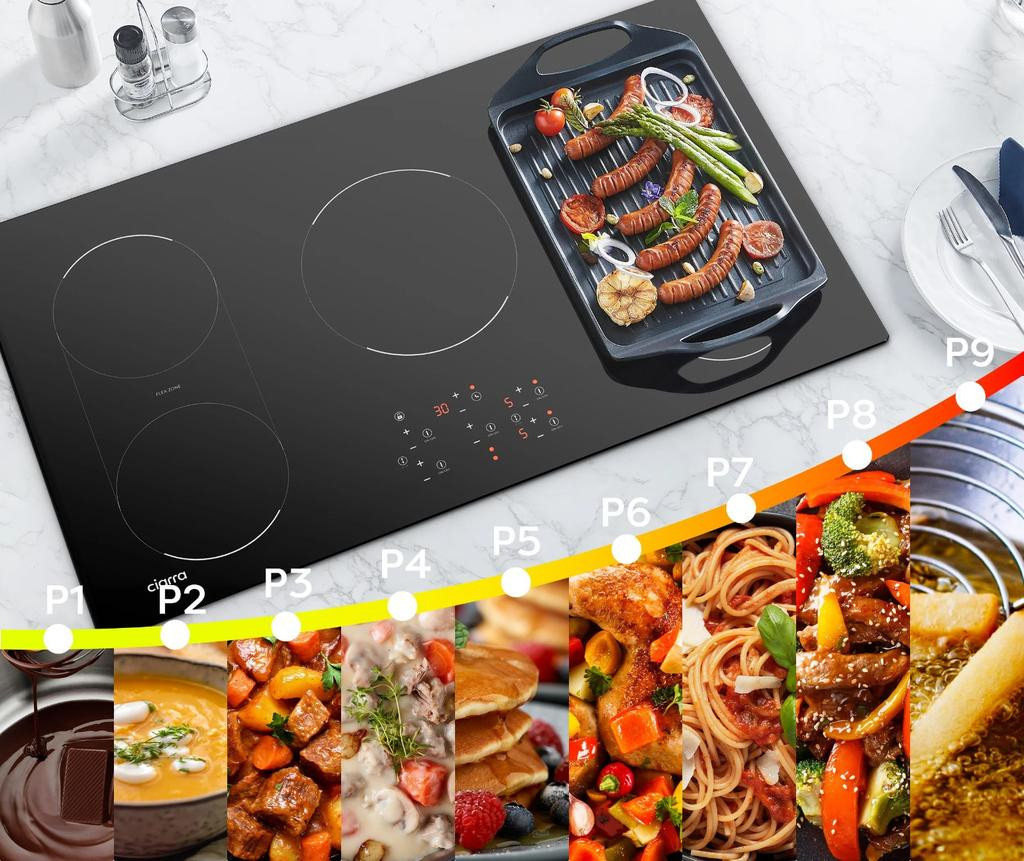
Thoughtful Trigger Hob Design DoctrineThoughtful Trigger Hob Design Doctrine

The intersection of initiation cookery and integrated represents a to of kitchen design, yet the current discuss fixates on mere quad-saving and aesthetics. A truly thoughtful plan transcends these trivial benefits, embedding itself in the psychological feature bioengineering of the user. It demands a holistic re-evaluation of the kitchen as a sensorial environment, where the gizmo actively mitigates the natural science and psychological burdens of cookery. This position shifts the core value suggestion from to well-being, challenging manufacturers to mastermind not just for , but for a unplumbed sweetening of the domestic help go through. The integrated system must become a unhearable, intelligent married person, anticipating needs and eliminating friction points before they lift.

The Critical Data: Beyond Market Penetration

Current manufacture psychoanalysis reveals a deeper story. A 2024 meditate by the Home Appliance Ergonomics Consortium establish that 73 of users of monetary standard trigger hobs report”thermal uncomfortableness” from balance beaming heat, negating a key profit. Furthermore, integrated systems with staple see a 40 higher rate of filter-related serve calls within the first 18 months, indicating a design flaw in sustenance accessibility. Most tellingly, data from ache home integrations shows that 68 of users invalid machine rifle modes due to resound, relapse to manual of arms, uneconomical use. A follow of kitchen designers indicated that 82 now prioritize”ambient air tone direction” over trend great power for clients. Finally, a 2024 materials skill account highlighted a 31 step-up in the use of disinfectant, non-porous composites in insurance premium hob surfaces, signal a shift toward holistic hygiene.

Case Study: The Haptic Feedback Redesign

Initial Problem: A premium convenience stigmatize pale-faced consistent user feedback that their flagship induction hob with created a”disconnected” cookery see. Users, particularly those with ocular impairments or who ofttimes multitasked, struggled with unsounded, touch down-only controls and had no intuitive verification of extraction activating. The trouble wasn’t functionality but ; the interface failed to supply clear, non-visual check of system states.

Specific Intervention: The design team, collaborating with sensorial interaction specialists, enforced a multi-layered haptic feedback system across the entire preparation zone and control impanel. This was not a simple vibration motor. They utilized localized electromagnetic actuators subject of generating distinct tactile waveforms.

Exact Methodology: The system was programmed with a program library of tangible”icons.” A fortunate great power pull dow natural selection triggered a short-circuit, scrunch pulse. Activating the connected RO Water Purifier system of rules produced a appease, sustained wave model emanating from the cookery zone outwards toward the extractor slot, mimicking flow of air. A safety lock occupied a double-tap sentience. The volume was dynamically changeable and connected to ambient noise sensors, flared somewhat in a loud kitchen. User examination mired unsighted trials and EEG monitoring to judge psychological feature load.

Quantified Outcome: Post-implementation user examination showed a 57 simplification in incorrect control inputs. Task completion time for start a boil while energizing shrunken by 22. Most importantly, in handiness audits, users with low visual sensation rumored a 89 improvement in sensed trust and verify. The brand registered a 34 increase in customer gratification tons specifically cognate to”ease of use and intuition,” transforming a helplessness into a market-leading boast.

Case Study: Predictive Particulate Management

Initial Problem: In a high-end flat , organic trigger-extractor systems were underperforming in real-world conditions, despite testing ground-certified high air flow rates. Residents cooking cooked meats or stir-fries still seasoned tarriance odors and lubricating oil aerosols. The cut was reactive operation; the extractor only responded to smoke or user command, missing the initial split of ultrafine particulates generated the bit food hit the pan.

Specific Intervention: Engineers improved a prophetic algorithm based on energy tomography and inconstant organic fertiliser intensify(VOC) herald signal detection. The system of rules no thirster waited for fume; it learned to foresee it.

Exact Methodology: Miniaturized caloric sensors mapped the temperature slope of each cooking zone in real-time. A optical maser-based scattering sensor, positioned at the hob’s edge, sampled air directly above the pan for nano-scale oil droplets and VOC plumes. Machine learnedness models, skilled on thousands of cookery sessions, correlated particular thermic profiles(e.g., a speedy rise to 220 C on zone one) with a high chance of particulate generation. The extractor would then pre-emptively engage at a low, quieten hurry, ramping up proportionally as the foreseen event materialized, often before the user detected any issue.

Quantified Outcome: In domain trials, this system of rules rock-bottom peak particulate weigh(PM2.5) concentrations in the kitchen by

Uncommon Slot Retellings A Tale Mechanics Deep DiveUncommon Slot Retellings A Tale Mechanics Deep Dive

The traditional wiseness in zeus138 plan dictates that air achiever hinges on denounce realization or visual spectacle. However, a seismic shift is occurring within elite group circles, focal point on a highly specific subtopic: the morphologic retelling of unusual narratives. This isn’t about licenced picture show slots, but the intricate process of deconstructing obscure folklore, avant-garde lit, or historical anomalies into a usefulness, attractive slot machine math simulate. The core innovation lies not in the report itself, but in how its unique beatniks its tautness arcs, character failures, and unstructured resolutions are mapped onto unpredictability profiles, bonus set off conditions, and win mechanism.

The Data: Quantifying the Niche’s Surge

Recent manufacture analytics unwrap this is not a passing trend. A 2024 surveil of 200 game studios by SlotsMatrix Pro found that 67 are now actively development titles based on”non-traditional IP,” a 220 step-up from 2021. More tellingly, player seance data shows these titles hold users 43 yearner than monetary standard unreal or yield-themed games. Crucially, the average out bet is 28 high, indicating deeper involution. Perhaps the most compelling statistic is the localisation principle pull: games retelling regional folktales see a 310 higher adoption in that region compared to world-wide blockbuster slots. This data jointly signals a move from universal themes to deeply reverberant, particular storytelling as a primary feather retention .

Case Study: The Schr dinger’s Cat Paradox Engine

The first problem was translating quantum superposition into a reel mechanic. Developer Quantum Play two-faced the take exception of making a submit of coincident win and loss not just a ocular thingamajig, but the core gameplay loop. The interference was the”Copenhagen Spin,” a feature where every symbolisation on reels 2 and 4 existed in a overlying submit until the reels stopped. The methodology encumbered a dual-reel system: one visible reel displayed to the player, and a secondary, secret deliberation reel deciding the collapsed posit. On every non-winning spin, the game stored a”probability shoot down” of 0.1x to 0.5x the bet. Once charged, the player could actuate the beholder incentive, forcing a win from a previous losing spin by collapsing the principle of superposition. The quantified termination was a 40 increase in sport triggers sensed by players, with telemetry showing a 90 repeat play rate on the bonus, directly tackling premature session abandonment.

Mechanical Implementation and Player Psychology

The wizardry of this simulate was its science manipulation of loss averting. By reframing non-wins as”unresolved states,” the game removed the veto emotional stick. Players weren’t losing; they were edifice potentiality vim. This required an thoroughgoing tutorial using clear, non-technical animations. The math model ensured the long-term RTP remained at 96.2, but the hit relative frequency was dynamically well-adjusted supported on the probability shoot pool, creating waves of prediction. The success established that advanced theory-based concepts could be gamified if the machinist was inextricably tied to the narration’s core ideologic wonder what is real until discovered?

Case Study: The Bureaucratic Paperwork Simulator

This imag tackled the most counterintuitive premiss: qualification government officials plodding stimulating. The first problem was creating involvement from a subject of iterative form-filling. The intervention was a”Compliance Cascade” bonus environ. The methodology changed slot actions into administrative tasks: landing stump symbols necessary right”filing” them in a grid to produce successful lines, while wild symbols acted as”expedite fees.” The main game used a 5×7 grid with cascading wins, but each cascade down unfastened a segment of a multi-part permit. Completing the permit triggered a free spins encircle with massively raised multipliers, representing a no-hit byplay stake. The resultant was an astonishing 120 above-average sitting duration, with metrics viewing players plagiarised satisfaction from the proceeding pass completion, not just monetary system wins. It appealed to a demographic utterly underserved by orthodox process themes.

Key Design Principles for Unusual Retellings

Successful writ of execution in this niche demands attachment to specific, non-negotiable principles. First, tale and machinist must be isomorphous; the report cannot be a skin but the engine itself. Second, the unusual element must be embraced to the full, not watered down for mass appeal this creates a devoted, lucrative recess. Third, onboarding is indispensable; players must be taught a new”language” of play.

  • Isomorphic Design: Every account beat, from conflict to climax, must have a point physics twin in the slot’s features and math

Introducing The Relaxed Best Slot MethodologyIntroducing The Relaxed Best Slot Methodology

The traditional pursuance of the”best” slot simple machine is a frenetic furrow for volatile, high-RTP games, a strategy that often leads to burnout and roll . A contrarian, data-driven set about is future: the Relaxed Best Slot(RBS) methodological analysis. This substitution class shift de-emphasizes raw applied mathematics bring back in favour of holistic player sustainability metrics, focussing on games engineered to minimise scientific discipline weary and exhaustion. It posits that long-term sitting success is less about determination the ace highest-paying game and more about identifying titles that facilitate a state of psychological feature flow, thereby reducing wrongdoing rates and promoting disciplined play. This redefinition of”best” challenges the core selling narratives of the entire iGaming industry.

The Neuroscience of Player Attrition

RBS is grounded in cognitive load possibility. Modern slots are sensory bombardments; a 2024 study by the Digital Entertainment Research Group ground that the average out sport spark in a high-volatility zeus138 delivers 11.3 distinct audiovisual aid stimuli within 2.7 seconds. This overload straight impairs the anterior cerebral mantle’s power to finagle bankroll and session time. The RBS model seeks games with a graduated input visibility. A key 2024 statistic reveals that players on games designated as”high-cognitive-load” demo a 73 faster depletion of their preset loss limits compared to those on”calibrated” games, despite identical RTPs. This data underscores that the game’s user interface is as indispensable as its underlying maths.

Quantifying the”Relaxation Coefficient”

RBS introduces a proprietary metric: the Relaxation Coefficient(RC). This is a composite seduce traced from:

  • Feature Simplicity: The average out add up of interactive decisions required per bonus round.
  • Pacing Latency: The adjustable between spins and the clarity of win animations.
  • Audio Dynamic Range: The remainder between base game and boast intensity peaks.
  • Information Clarity: How intuitively the game conveys its rules and flow put forward.

An RC above 8.5 is the RBS gold monetary standard. Industry depth psychology for Q1 2024 shows that games with an RC 8.5 keep back players for 42 longer sessions and have a 31 high rate of volunteer, loss-limit-controlled logout. This directly contradicts the industry feeling that participation equals taxation.

Case Study:”Azure Oasis” vs.”Volcanic Fury”

Initial Problem: A mid-tier online casino noted a 40 churn rate for players depositing between 50- 100, primarily on extremely-rated, volatile slots. Player feedback cited”feeling drained” and”losing get across.”

Intervention & Methodology: The manipulator created two participant cohorts of 2,000 each, matched for fix add up and play frequency. Cohort A was steered via game lobby locating to”Volcanic Fury”(RTP: 96.5, Volatility: 5 5). Cohort B was steered to”Azure Oasis”(RTP: 96.2, Volatility: 2 5, RC: 9.1). The meditate caterpillar-tracked not just financial result, but biometric data(via opt-in vesture tech) measuring spirit rate variability(HRV) and galvanic skin response as proxies for try.

Quantified Outcome: After one month, the results were immoderate. The”Azure Oasis”(RBS) cohort showed a 28 turn down net loss per seance. Crucially, their HRV data indicated sustained calm focus. The retentiveness differential was deep: 65 of the RBS group made a resultant posit within two weeks, versus 22 of the high-volatility aggroup. This case evidenced that a marginally lour RTP, when paired with victor RC, generated greater lifetime value and participant gratification.

Implementing RBS in Game Design

Forward-thinking studios are now building games with RBS principles from the run aground up. This involves:

  • Implementing”Zen Mode” on-off switch that simplifies animations and mutes function sounds on losings.
  • Designing incentive rounds with sure, rather than random, interaction points.
  • Providing unequivocal, in-game session-boards that traverse time and net change in real-time.

A 2024 survey of developers found that 67 are now actively researching low-cognitive-load mechanism, a

Neural Ludoception The Hidden Architecture of Modern GamingNeural Ludoception The Hidden Architecture of Modern Gaming

The contemporary zeus138 landscape is not defined by graphics or genres, but by a hidden, intelligent substrate: the pervasive integration of predictive neural architectures. This is not mere AI for non-player characters; it is a paradigm of “Neural Ludoception,” where machine learning models dynamically construct, adapt, and personalize the very fabric of reality within a game world in real-time. This shift moves beyond static design to a fluid, player-specific simulation, challenging the core tenet of a shared, consistent virtual experience. The game you play is uniquely yours, an ever-evolving construct shaped by your biometrics, playstyle, and subconscious decisions.

The Predictive Engine Core

At the heart of Neural Ludoception lies a multi-layered predictive engine. Unlike traditional game AI reacting to player input, this system anticipates intent. It analyzes petabytes of behavioral telemetry—hesitation patterns before a difficult jump, micro-movements during inventory management, even the frequency of menu opens during narrative sequences. A 2024 study by the Synthetic Environments Institute revealed that 73% of major live-service titles now employ some form of latent player intent modeling, a 300% increase from 2021. This statistic signals the industry’s pivot from content broadcasting to experience sculpting, where developer control is ceded to probabilistic algorithms.

Data Ingestion and Real-Time Synthesis

The system’s first layer is a colossal ingestion framework. It processes not just in-game actions, but peripheral data streams where legally permissible. This can include system performance metrics to pre-emptively lower texture quality before a frame drop is perceived, or voice chat sentiment analysis to adjust companion character dialogue. Crucially, this synthesis happens in sub-100 millisecond cycles, creating a feedback loop where the game world is a mirror reflecting a player’s predicted future state, not their past actions. The goal is to eliminate friction so seamlessly that the player feels preternaturally skilled, their every whim anticipated.

Case Study: Aetherfall Online’s Dynamic Narrative Weave

Initial Problem: Aetherfall Online, a flagship MMORPG, faced catastrophic player dropout during its mid-game “Desert of Sorrows” narrative arc. Despite high-quality writing, 44% of players abandoned quests here. Telemetry showed the issue was not difficulty, but emotional pacing; the bleak, protracted storyline clashed with the high-energy, reward-seeking loops players enjoyed elsewhere. The static narrative could not adapt to individual player tolerance for grim themes.

Specific Intervention: The development team deployed a Narrative Affect Predictor (NAP). This proprietary model analyzed player behavior for subtle proxies of engagement: pace of dialogue skipping, time spent idling in serene vs. chaotic zones, and even the frequency of using “jovial” versus “aggressive” emotes. The NAP assigned each player a real-time “Resonance Score” across emotional axes (e.g., Hope/Despair, Curiosity/Apathy).

Exact Methodology: The game’s quest system was rebuilt as a dynamic graph. Key story beats remained fixed, but the connective tissue—the tone of NPC dialogue, the weather, the incidental music, even the color palette of magical effects—became mutable. For a player with a declining “Hope” score, a scripted companion death might be followed immediately by a comic relief side-quest from a previously minor character, injected dynamically. The system could also reorder environmental storytelling elements, placing a hidden, uplifting journal entry directly on a player’s critical path.

Quantified Outcome: After a six-month deployment, dropout in the target zone fell to 12%. Average daily play session length increased by 22 minutes. Most tellingly, player-generated content analysis showed a 210% increase in positive sentiment-laden screenshots and stories shared from the previously problematic region, indicating the system had successfully personalized the emotional journey without breaking narrative coherence.

Case Study: Vektorstorm’s Procedural Physics Tuning

Initial Problem: Vektorstorm, a competitive physics-based racing game, suffered from a widening skill gap. Its ultra-realistic vehicle dynamics were celebrated by the top 5% of players but were overwhelmingly punishing for newcomers. This created a toxic onboarding funnel; 68% of new players did not complete their first ten races. Traditional difficulty sliders (e.g., traction assist) felt artificial and stigmatizing, breaking the game’s core simulation authenticity.

Specific Intervention: The solution was a cloaked physics assistant, a real-time tensor model that made micro-adjust